
Camden breaks ground on two new hostels to address the housing crisis and support people in need of accommodation
Camden begins work on two new hostels to help people in need of immediate temporary accommodation and tackle London’s housing crisis.
Part of Camden’s Community Investment Programme, two new hostels are being built on Camden Road and Chester Road to address the housing crisis and house people who do not have a permanent home.
The development is part of Camden’s response to the Capital’s housing crisis which has resulted in 175,000 people in London living in temporary accommodation.
This accommodation will be for those who do not have a home and need a safe, good quality and secure place to live – which could be as a result of a sudden eviction, life event or those escaping domestic violence.
89 safe and good quality accommodation units will be built across the two sites and will be self-contained, with a kitchen and bathroom fitted in each unit.
To fund this work, Camden successfully bid for £1.5million from the UK Government’s Brownfield Land Release Fund (BLRF) to carry out enabling work as well as £4.6million from the Local Authority Housing Funding (LAHF) to support project delivery.
Camden Council appointed Morgan Sindall Construction as contractor for the project which is due to be complete in late Summer 2026.
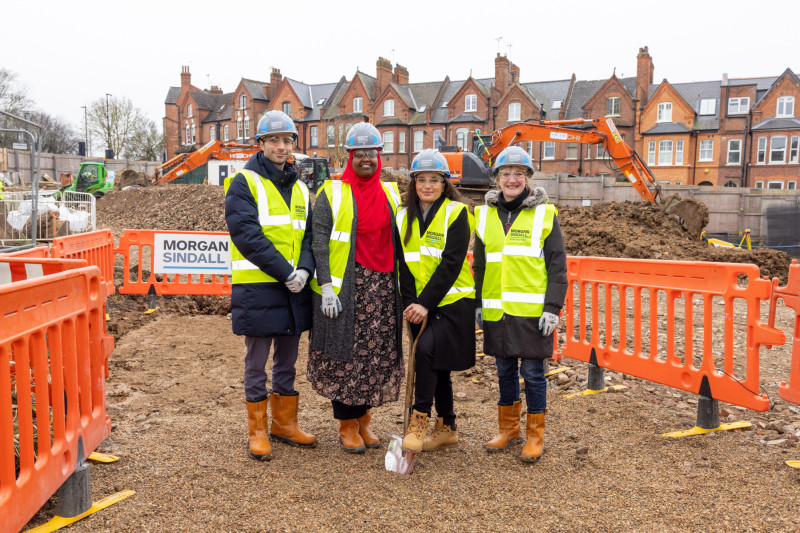
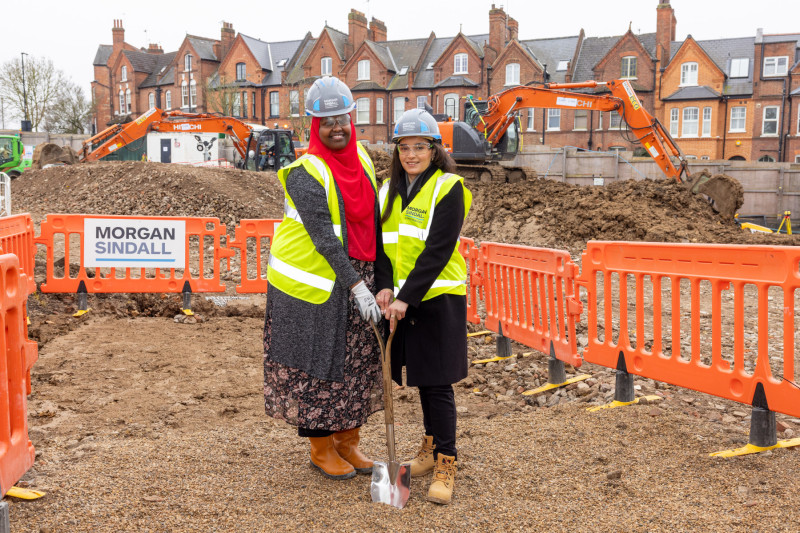
To mark the start of these vital works, Camden’s Cabinet Member for New Homes and Community Investment, Councillor Nasrine Djemai and Cabinet Member for Better Homes, Councillor Sagal Abdi-Wali, gathered alongside local ward Councillors Councillor Anna Wright and Councillor Camron Aref-Adib and representatives from Morgan Sindall Construction at the Chester Road site on Thursday 12th of December.

Our Community Investment Programme is not only helping to tackle the housing crisis by building more high-quality, family-sized homes, but we are also delivering better quality temporary accommodation like the Camden Road and Chester Road hostels to support people in the short-term who do not have a secure place to call home.
This new temporary accommodation will be energy efficient, safe, secure and be built to the highest quality. Alongside this we want to ensure this development benefits local communities and as part of the works, contractors will provide apprenticeships, work experience placements and ring-fence job vacancies for local people.


Building more temporary accommodation is a crucial responsibility for Camden as we can help support those in desperate need of a safe place to stay until a more longer-term solution is allocated. By investing in two high-quality hostels, we can also reduce how much we spend each year on hotel and out-of-borough temporary accommodation, reallocating that money into our services and building more high-quality council homes for local people and families.
Richard Dobson, Area Director of Morgan Sindall Construction in London, said: “This project is incredibly important to the people of Camden, helping to ease the strain that homelessness has on families in the borough. It means a lot for the team to be part of developing Camden Hostels, where our work can help provide a warm shelter and safe roof over the heads of people who need it. Overall, we can’t wait to see the units come to life for the community. We’re also looking forward to continuing our close and collaborative relationship with Camden Council, which has been built up over a number of other projects in the borough, during this development. A central part of this will be getting to know the local community through the various social initiatives and apprenticeship programmes we have planned.”
This development is part of Camden’s ambitious Community Investment Programme, a 15-year programme to invest money in council homes, schools and new community facilities across the borough for Camden residents.
The development will include two hostels, consisting of 39 units on Camden Road and 50 units on Chester Road. Both hostels will include a mixture of single and double beds, with each unit fitted with its own kitchen and bathroom.
The wider sites have been designed to accommodate a community room, staff room, and outside gardens with benches and play areas for children, creating a neighbourhood feel and helping residents feel at home and in a welcoming environment while they wait for more permanent housing.